

Why BLINK Doesn't Accept Full Custom Orders | Our Commitment to Standard Models
Why BLINK Does Not Produce "Full Custom Scissor Cases"
At BLINK LEATHER WORKS, we currently only offer standard scissor cases and do not accept orders for full custom (one-of-a-kind) pieces.
While we sometimes receive requests like, "I want a special scissor case just for me" or "Can I get a custom-made one?", there's a clear reason why we deliberately don't accept such orders.
A truly user-friendly scissor case cannot be perfected with just one or two prototypes.
Just like hairstyles, it's difficult to achieve perfection with just one practice session.
The same applies to scissor cases, especially products made with genuine leather, where not only the appearance but also the comfort, weight, and durability must be considered.
To achieve a satisfactory finish, repeated prototyping and continuous improvement are essential.
BLINK's standard models take 2 to 3 years to take shape.
At BLINK, it takes 2 to 3 years of prototyping and testing to complete a single scissor case.
This is also true for Ichizawa Shinzaburo Hanpu, famous for its canvas bags.
When I heard that they spend two years on development before releasing a new product,
I deeply resonated with "the importance of taking time."
"Standard" is not an end, but a process of evolution.
BLINK's scissor cases are, so to speak, "constantly evolving standards."
Based on customer feedback, we repeatedly make small, almost unnoticeable improvements, enhancing accuracy down to the smallest details.
Scissor cases that are a part of a hairstylist's "everyday"
BLINK aims to create a "partner" for hairstylists, something they want to continue using every day.
Neither mass-produced nor special one-of-a-kind pieces,
we will continue to create authentic scissor cases that enrich daily salon work.
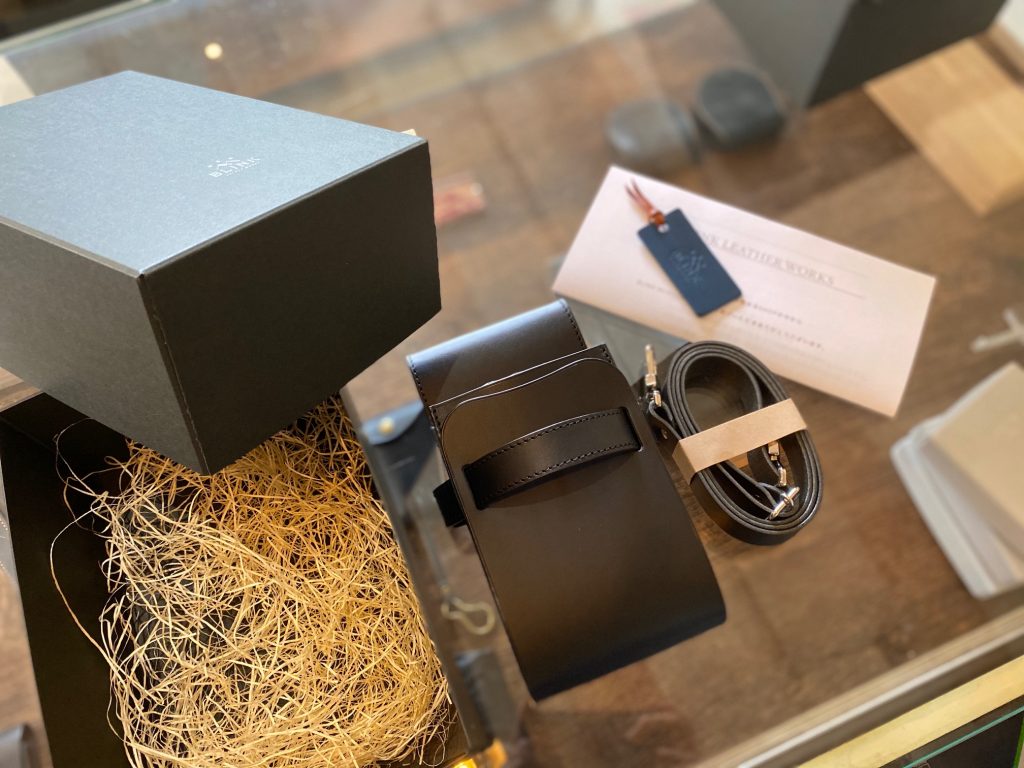
BLINK LEATHER WORKS
Tanaka
Related page:View BLINK's standard scissor case lineup →
Also read:See current custom order methods →